
Share Helen Mayer Harrison's obituary with others.
Invite friends and family to read the obituary and add memories.
Stay updated
We'll notify you when service details or new memories are added.
You're now following this obituary
We'll email you when there are updates.
Select your format and elements to print

IN LOVING MEMORY OF Helen Mayer Harrison
Helen Mayer
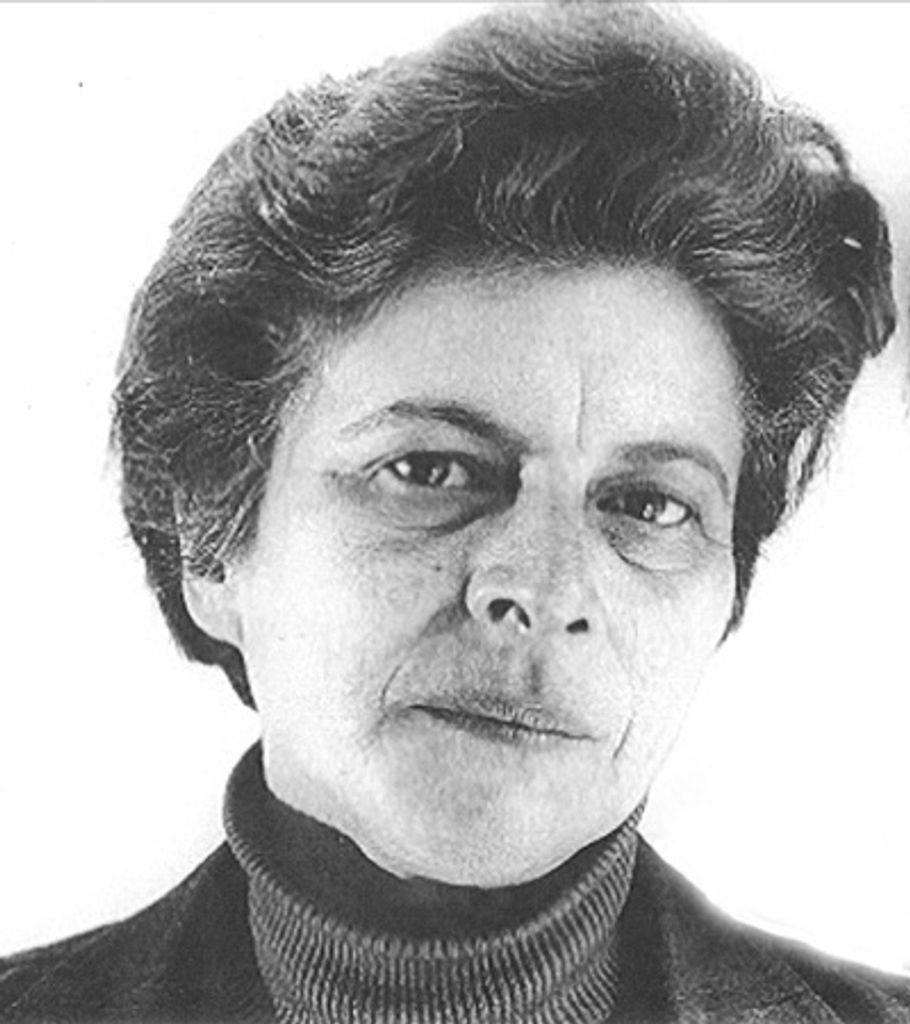
Harrison
Jul 1, 1927 — Mar 24, 2018
Santa Cruz
Helen Mayer Harrison's Obituary
Helen Mayer Harrison, artist, educator, activist, and mentor to generations of artists and activists passed away peacefully in her home in Santa Cruz, CA on March 24, 2018, after a long battle with Alzheimer's disease, surrounded by her family and loving husband of almost 65 years.
Helen's long and productive career followed an unlikely path that reflected and eventually integrated her many interests. She was born on July 1, 1927 in Queens, New York and graduated from Forest Hills High School. A gifted student, Helen was awarded a full scholarship to Cornell University, studying psychology for two years before deciding ultimately to attend Queens College where she completed a Bachelor of Arts degree in English. From there she earned a masters degree in Philosophy of Education from New York University (NYU), and began her teaching career during the 1940s in the New York public school system. Helen would eventually pursue doctorates in both the philosophy of Education at NYU and in Clinical Psychology at SDIU.
In the early 1950s, she met, fell in love and married a young artist, Newton Harrison. After moving to Florence in the 1950s with Newton and 2 young children, she co-founded a Montessori school, working closely with Mario Montessori, Maria's nephew. Moving back to the Lower East Side of New York in the early 1960s with a family that now included 4 children and a well-traveled German shepherd, she threw herself into a cultural scene that merged the art world, the folk music world and the peace movement. She hosted concerts and Hootenannies to raise funds for the civil rights movement and other causes, befriending musicians ranging from the Clancy Brothers to Archie Shepp. She founded the Tompkins Square Peace Center. The group she helped put together included Dorothy Day of the Catholic Worker, Dave McReynolds of the War Resisters League, Judith Malina and Julian Beck of the Living Theater, David Dellinger of the Pacifist Anarchist Group, and Robert Gilmore from the American Friends Service Committee. She also served as the first New York coordinator for the Women's Strike for Peace, a major force in the anti-war movement and a critical organization behind the 1964 Nuclear Test Ban treaty.
After Newton completed his master's degree at Yale in 1965, they both were offered teaching positions at the University of New Mexico where Helen taught Literature. In a state with a large marginalized Native American population, Helen set up special classes for Native American children, who often had to leave school to assist their families with harvesting. Helen developed a range of creative curricula that accommodated their lives while respecting their culture.
Two years later, when Newton was offered a faculty position in the Visual Arts Department at UC San Diego, Helen was recruited to direct the UC Extension Division's education programs, and found herself in line to become the first woman vice-chancellor in the history of the university.
In 1972 Helen resigned from UC Extension to pursue art full-time. In her resignation letter, she wrote, "I have had too much fun here! However, I am becoming an artist in my old age and I am doing what we have offered a number of Extension courses about: 'switching careers midstream'." The Harrisons eventually both secured faculty appointments in the Visual Arts Department at UC San Diego and subsequently emeriti faculty appointments in the Art Department at UC Santa Cruz. At UCSD, they were active participants in a seminal creative community that included David and Eleanor Antin, Jerome Rothenberg, Pauline Oliveros, Manny Farber, Italo Scanga and many others.
Helen found her true calling when she joined her life partner Newton Harrison as an ecological artist. In turn she became a noted feminist, lecturer, teacher, and mentor to hundreds of emerging artists from her base at UCSD and later UC Santa Cruz. Her nearly 50-year creative collaboration (as the Harrisons or Helen Mayer and Newton Harrison) quickly focused on explorations of life and living systems, opening up a new movement in the arts, "eco-art." Their great insight came in understanding that the importance of the interconnectedness of life was at once a great mystery, an intriguing puzzle, a path towards solving difficult problems, and of course, a lot of fun.
"What we have to be concerned about is what is happening to the entire planet," said Helen of their work. "What we are concerned about is the survival of the people and all living things."
As their work developed, so did the strength of their collaboration; they developed a style that reflected their complementary voices. They boldly and consciously experimented with how the act of collaboration generated new forms in the art, adding dimension to their powers of diverse discipline engagement and improvisation. Throughout it all, Helen's commitment to an ethics of listening, of focusing on the power of the powerless, of engagement with local communities and native peoples remained dominant themes throughout their long body of work. Helen's unbridled curiosity and ability to synthesize ideas across a broad range of disciplines was a critical aspect of their ability to engage ideas and systems at the highest level. In their master work, The Lagoon Cycle, which examines the power and function of estuarial lagoons from the laboratory to the great Pacific gyre, the narrative thread is an encounter between two characters, a 'Lagoon Maker' and a 'Witness', whose dialog establishes the philosophical basis for the ecological argument in many later works.
Whether working with Gregory Bateson, Fritz Perls, Jacob Bronowski, John Isaacs or the many world-class scientists and academics with whom they engaged over decades of work in dozens of countries, Helen was able to address their insights and integrate them into the Harrison's uncommon perspective, yielding often powerful results. As one of many examples:
In the mid-1990s, a branch of the Dutch government challenged the artists to solve an enormous urban planning problem: how to build hundreds of thousands of new houses while protecting the country's lush green lowlands, known locally as the 'Green Heart' of the country. The Harrisons created beautiful aerial landscape videos to bewitch the initially skeptical officials. They also audaciously exhibited a big map of Holland — printed backwards. "The planners got mad at us and they said, 'Why have you done this?' And we said, 'you're planning your country backwards, so we printed your map backwards.'" With that map, along with over 700 public meetings, they eventually won over the officials, who adopted their vision to preserve "The Green Heart" of Holland.
In her final years, Helen worked with Newton on Sagehen in the High Sierra: A Future Garden for The Center for the Study of the Force Majeure, a center they developed at UC Santa Cruz that brings together artists, scientists, engineers, planners, and visionaries to design ecosystem adaptation works in regions around the world that are nearing critical tipping points due to planetary warming.
The Harrisons' deep interest in involving people of the Washoe Tribe, who for thousands of years have called the Sagehen area and beyond their ancestral home, was essential to the project. The relationship evolved from a public event at the Nevada Museum of Art where Helen addressed the meeting and asked for help. Tribal elder Benny Fillmore notes that is was the first time he'd been asked by anyone outside the tribe to collaborate on an art project.
Laura Fillmore, who met Helen in the course of working on Sagehen wrote recently, "Today is the 4th day since her passing and I feel such tenderness towards her circles of friends and artists and especially am grateful for the teachings that came from her collaboration with Newton, her life mate in the deepest sense of the respect one has for couples who really can 'be one another'. She taught us about 'caring' because, she would say, it makes people shy when you talk about love. It will always be all about that love and her grace and elegance and eloquence as well."
The Harrisons have been represented for the past 45 years by the Ronald Feldman Gallery in New York, joined recently by Various Small Fires in Los Angeles. Ron Feldman writes, "Helen's fierce dedication, compassion, and warmth is irreplaceable."
Helen's work lives on through Newton, who is actively continuing their work.
Perhaps the best way to see Helen in her world is through the ending lines of the Lagoon Cycle, which she often recited as part of her many public performances:
And the waters will rise slowly
at the boundary
at the edge
redrawing that boundary
continually
moment by moment
all over
altogether
all at once
It is a graceful drawing and redrawing
this response to the millennia of the making of fire
And in this new beginning
this continuously rebeginning
will you feed me when my lands can no longer produce
and will I house you when your lands are covered with water
so that together
we can withdraw
as the waters rise
(
Lagoon Cycle
, 1979)
In addition to her husband, Helen is survived by their children, Steven (Cheryl) Harrison, Joshua (Laurie Stricks) Harrison, Gabriel (Maureen) Harrison, and Joy (Bryan Stubbs) Harrison, and grandchildren, Ashlee, Marshall, Joseph, Michael, Mackenzy, Ana Sofia, Julian, Silas and Ruby along with 4 great grandchildren and many nieces and nephews.
The family will be holding a private service and celebration of Helen's life.
In lieu of flowers the family requests that people make donations to the Sierra Club in her name.
Helen Mayer Harrison's Guestbook
Visits: 11
This site is protected by reCAPTCHA and the
Google Privacy Policy and Terms of Service apply.
Service map data © OpenStreetMap contributors